
Absolutely. Here is a more developed description that positions Imagining a Queer and Black Institution as a cultural, literary, and diasporic intervention, while expanding the meaning of “queer” beyond sexuality into unconventional ways of living, thinking, creating, and belonging.
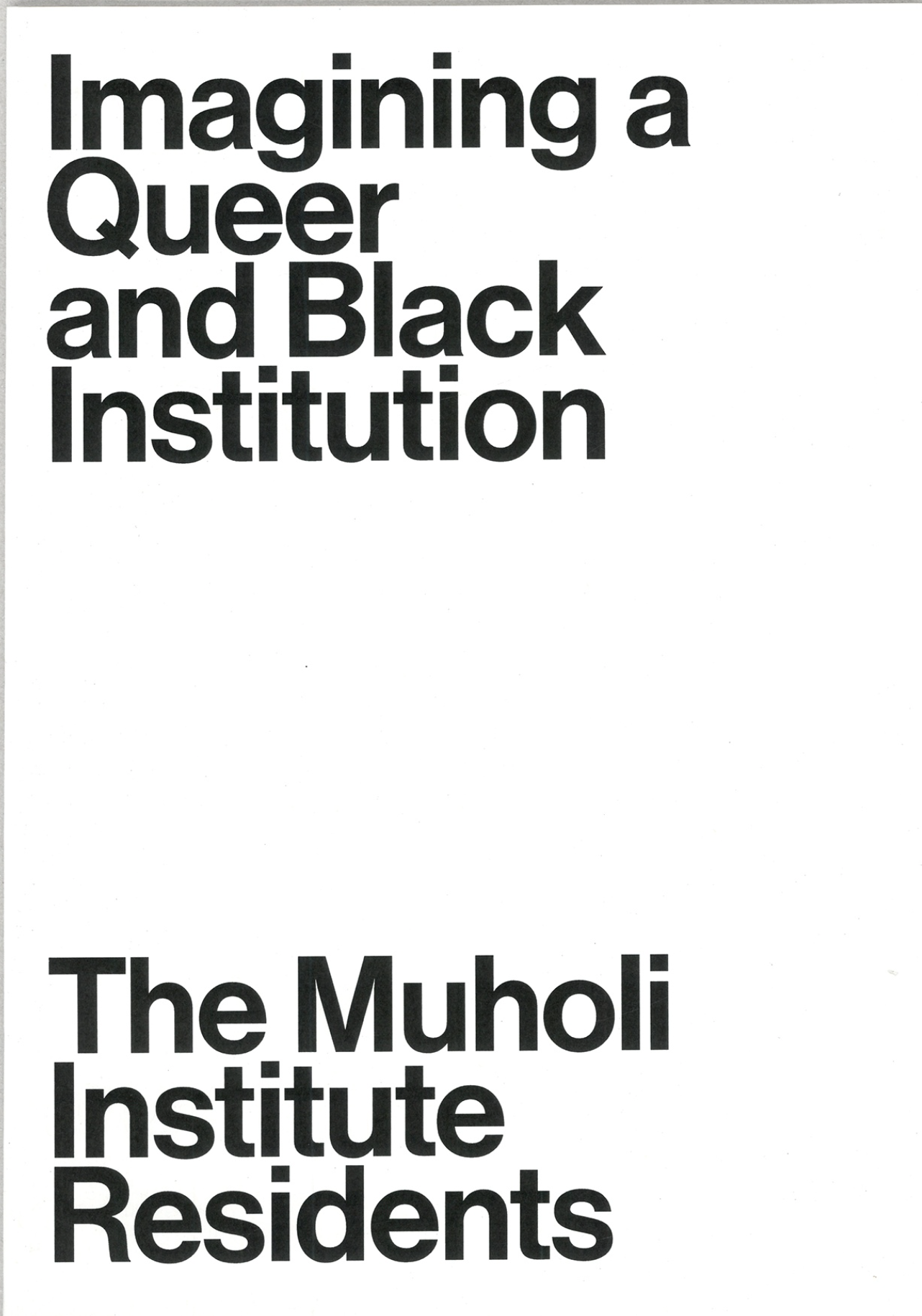
Imagining a Queer and Black Institution
Imagining a Queer and Black Institution is a collective anthology that brings together diverse voices, experiences, cultures, and perspectives from across the African and global diaspora. The anthology creates a space to imagine what institutions, communities, relationships, and systems could look like when they are no longer confined by conventional ideas of identity, belonging, success, family, culture, or social order.
At the heart of the anthology is an expanded understanding of the word “queer.” Here, queer is not limited to sexuality or gender. It speaks to the act of living, thinking, creating, loving, organising, and existing outside of prescribed norms. To queer something is to question what has been presented as the only way of doing things and to make room for alternative possibilities. The anthology therefore considers queerness as a form of imagination, resistance, self-determination, and freedom.
Through poetry, personal narratives, reflections, visual contributions, and experimental forms of storytelling, the collective explores what it means to exist between worlds. Contributors engage with questions of race, culture, migration, spirituality, gender, language, family, community, displacement, belonging, and self-expression. These perspectives demonstrate that Black and diasporic experiences are not singular; they are layered, evolving, and shaped by different histories, geographies, traditions, and ways of seeing the world.
The anthology also challenges the idea of the institution as something fixed, authoritative, and inherited. Rather than imagining an institution only as a formal organisation or physical structure, the contributors ask: What if our bodies, our homes, our chosen families, our creative practices, our communities, and our collective knowledge could become institutions in their own right? What would we build if we were given the freedom to design spaces that genuinely reflected the complexity of our identities and experiences?
Imagining a Queer and Black Institution consequently becomes an exercise in collective world-building. It gives space to voices that have historically existed at the margins while recognising that the margins can also become sites of innovation, knowledge, creativity, and liberation. It celebrates the unconventional—not as something that needs to be corrected or assimilated, but as a source of possibility.
The anthology expands the conversation around what it means to be Black, queer, African, diasporic, creative, spiritual, unconventional, and human. It invites readers to consider identities not as rigid categories but as living, breathing experiences that can transform across time and place.
Ultimately, Imagining a Queer and Black Institution asks us to move beyond simply seeking inclusion within existing structures. It asks us to imagine, question, dismantle, redesign, and create new structures altogether—ones capable of holding the multiplicity of our cultures, histories, identities, relationships, dreams, and futures.